An alliance, due to be launched in July, along with the consent of some of the UK’s major vehicle manufacturers, could mean that fleets will find making the switch from petrol and diesel models to LPG not only cost effective but better for their total carbon footprint.
“This alliance was formed after the success of New LPG vehicles being supplied into the Taxi Market. As this is a real test of a vehicle’s endurance, with some taxi’s having exceeded 80,000 miles per annum, it was felt with this reliability there would be a considerable interest if launched into the Fleet Market. Fleet Operators will have to consider LPG as a cost effective and viable option to petrol and diesel vehicles. As a part of the alliance’s offer, there is also the ability to install gas tanks on customer sites which allows the Fleet Operator to reduce his fuel and servicing costs even further” stated Rob Breuilly Managing Director of the vehicle supply arm.
There are thought to be around 150,000 LPG vehicles on UK roads, whilst Europe boasts more than 7million, selling around 4,000 units per week, this is due to some European Governments still subsidising the costs of the conversion.
Breuilly’s agreement with the Manufacturers will allow fleets to order petrol vehicles that have the capability to be converted to LPG, and thanks to economies of scale, provide an extremely attractive package for any small to large Fleet Buyer , thereby increasing the savings even further Combined with substantially reduced running costs of LPG vehicles, makes the case indisputable; (current pump prices standing at 77.5p/litre, according to www.petrolprices.com, compared with 137.2p/litre for unleaded and 142.2p/litre for diesel). And, if fleets have their own LPG tank installed on site, the cost could drop to just 67.5p/l, according to John Burke of Autogas Network. As stated above, the alliance has already run a trial of the system with Vauxhall in the UK’s Taxi Market, and so far has realised a return of 9.1p/mile for converted LPG vehicles as against 12.6p/mile for diesel and 17.1p/mile for petrol.
With 1400 LPG filling stations currently in the UK, this is rising daily as the interest from the major Supermarket chains grows to install gas pumps in all their stations, it would seem that the UK have been slow to embrace this technology, following the Government withdrawal of subsidies, something that Burke puts down to “our nervous approach to anything new”.
“Here in the UK we are so far behind Europe when it comes to taking up LPG and I think it’s about time we re-appraised the advances made in LPG technology.
.
The alliance believes the launch has come at the right time as by 2020 there is a European requirement to ensure that 20% of vehicles on our roads are running on alternative fuels (including Hydrogen and electric): “Hydrogen and electric vehicles are still too far away to have an immediate effect – it could be 10 or even 20 years before we see a real impact from
these vehicles.
But LPG is here now!
All we hear about in the press is focused on diesel and CO2 emissions.
It is “this obsession with CO2” from both Government and industry that has clouded the environmental issue, claims John Burke. “Diesels may be pumping out lower CO2 levels today but they still produce toxic NOx, hydrocarbons and Benzines which all affect people’s health. We seem to be living in a hydrocarbon soup and yet have failed to realise that there are virtually no particulates produced from an LPG vehicle.” In fact, LPG vehicles are already meeting environmental standards for Euro VI on NOx, while PM levels are too low to measure.
The Alliance expects to sell 3-4000 vehicles a year within the first three years and has already placed substantial forward orders. Lead time is expected to be about eight weeks depending on the size of the order.
For further information as to vehicle availability contact John Burke on 07886 801609
www.dualfuelsavings.com or info@dualfuelsavings.co.uk
www.autogas-alliance.com or info@autogas-alliance.com
Showing posts with label Hybrid and Fuel Cell Vehicles. Show all posts
Saturday, 4 June 2011
Thursday, 30 December 2010
Electric Vehicle Predictions 2011
Pike Research have put together a well reasoned piece of 'future gazing' that hits the right mix of practical expectation combined with 'real world' snags that will ultimately make of break the Electric Vehicle Markets.
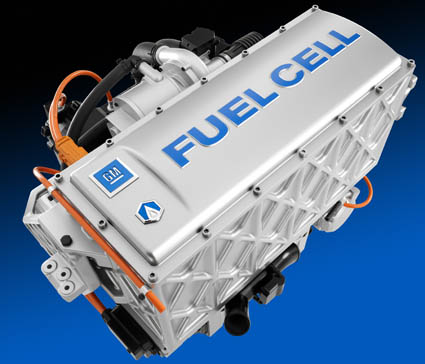
As Autogas Network, we welcome these predictions as they highlight some of the significant practical and distribution issues with the 'pure' electric vehicle. Pike also introduce the most likely 'winner' as the fuel cell. Whilst not perceived as an 'electric vehicle' by the media, it is a mix of known fuels, passing through a 'magic [black?] box' to directly produce electricity [and heat]. The fuel cell will NOT burn the fuel, nor will there be any form of combustion [the root cause of most traffic related air pollution].
The electricity from the fuel cell will power the vehicle's wheels. As it can use Hydrogen, CNG (Compressed Natural Gas) or LPG (Liquefied Petroleum Gas - From natural gas and oil fields) as 'fuel' [to directly generate electricity with no moving parts] its much more efficient than grid produced electricity and far more efficient than the outmoded combustion engine. Hydrogen distribution is problematic, but CNG and LPG are already readily available. Whilst these do give some minor air pollution they are a significant improvement over the too popular diesel engine.
The Pike Research Findings
The electric car will get its revenge in 2011 as many of the world's largest automotive OEMs begin selling thousands of plug-in electric vehicles (PEVs) to consumers. Sales of charging infrastructure and PEVs, including both plug-in hybrids and battery electric vehicles, got off to a slower-than-anticipated start in 2010, with only a few vehicles being delivered at the end of December. Consequently, 2011 will be a year to make up for lost time. Rental fleets and car share programs will play an important role in providing many consumers with their first hands-on experience with a PEV.
Electric vehicle rollouts will receive considerable attention and scrutiny as the industry watches to see whether they meet up with consumer expectations. The PEVs' market performance will influence automakers' plans to introduce more models and to ramp up production. Any glitches in meeting production deadlines for vehicles or batteries and/or any negative consumer reaction will be magnified by the high level of interest.
Battery electric vehicles [may] will serve as a secondary vehicle for most households, while plug-in hybrids, with their long driving range, can serve as the primary vehicle. The notion of range anxiety will be largely dispelled through a combination of driver education and the emergence of strategically placed charging spots. While charging stations were installed by the handful in pockets around the globe in 2010, 2011 will see the installation of hundreds of charging stations in cities such as London, Barcelona, San Francisco and Nashville.
While many of these charging stations are likely to be underutilized initially, by 2012 they will be in greater demand as owners begin to travel further with their vehicles and become more familiar with where and how often to charge. Another electric vehicle category that will continue to develop is the fuel cell vehicle, which will remain on its slow drive toward a planned commercial launch in 2015 through larger fleet and consumer evaluations.
Two-wheel electric vehicles will see strong growth globally, and the market in North America is expected to grow by 27% in 2011. Pike Research has identified 10 key trends that will steer the course of PEVs for the remainder of the decade.
Main Predictions from Pike, with Comments by Autogas Network
1. The majority of people who drive a plug-in vehicle won't own it.
The point being that ownership comes with risk in new technology. So most will drive a leased or pooled electric vehicle.
2. Automakers will get pushback from EV owners regarding the length of time it takes to fully charge a vehicle.
Charging times due to the current high costs of batteries, are not practical for all but the most infrequent users. Although some talk of a system of battery swaps, this in itself gives rise to more problems.
3. Stop-start vehicles will arrive in the United States, albeit in small numbers.
While Pike is looking at the US, the same will be true in Europe as 'high profile' leaders position themselves as the 'innovators'.
4. Many EV charging stations will spend the majority of their time idle.
Certainly early on charging stations will be poorly utilised as only relatively a few cars will use them. Partly as they would be charged up overnight at 'home'.
5. Fuel cell vehicles will be sold to fleets and consumers in small but growing numbers
As a leased vehicle, an Electric Hybrid and latterly fuel cell vehicle can hit the market earlier due to the buying power of fleets against the limited numbers of 'early technology adopters'.
6. Someone somewhere will have a bad EV experience and the media will over-react.
What more can anybody say. Its what the media does best. Any over-reaction will cause a 'loss of confidence' which in turn will weaken demand.
7. The advanced battery category will heat up with M&A activity
At the present time any radical improvement in battery technology will be seized upon as the next 'investment opportunity'. However without these advances current electric car practicalities are limited. Thus the Hybrid and fuel cell varieties have the advantage here.
8. "Range anxiety" will prove to be more fiction than fact.
Pike have noted that most 'average' car users travel only limited distances. Short journeys tend to cause more pollution, so the PEV
9. The best-selling EVs won't have four wheels.
Pike have noted that electric motor bikes may become more practical particularly in our congested cities.
10. The landscape for charging equipment will undergo a seismic shift as the category swiftly moves toward becoming a commodity market
At present charging equipment is very specialised. Until it becomes freely available and 'commodatised' prices will remain high and be a negative factor.
![]() |
| Ballard Fuel Cell |
![]() |
| GM Fuel Cell Unit |
The Pike Research Findings
The electric car will get its revenge in 2011 as many of the world's largest automotive OEMs begin selling thousands of plug-in electric vehicles (PEVs) to consumers. Sales of charging infrastructure and PEVs, including both plug-in hybrids and battery electric vehicles, got off to a slower-than-anticipated start in 2010, with only a few vehicles being delivered at the end of December. Consequently, 2011 will be a year to make up for lost time. Rental fleets and car share programs will play an important role in providing many consumers with their first hands-on experience with a PEV.
![]() |
| British Police in Electric Smart: Not exactly Ideal? |
Battery electric vehicles [may] will serve as a secondary vehicle for most households, while plug-in hybrids, with their long driving range, can serve as the primary vehicle. The notion of range anxiety will be largely dispelled through a combination of driver education and the emergence of strategically placed charging spots. While charging stations were installed by the handful in pockets around the globe in 2010, 2011 will see the installation of hundreds of charging stations in cities such as London, Barcelona, San Francisco and Nashville.
While many of these charging stations are likely to be underutilized initially, by 2012 they will be in greater demand as owners begin to travel further with their vehicles and become more familiar with where and how often to charge. Another electric vehicle category that will continue to develop is the fuel cell vehicle, which will remain on its slow drive toward a planned commercial launch in 2015 through larger fleet and consumer evaluations.
Two-wheel electric vehicles will see strong growth globally, and the market in North America is expected to grow by 27% in 2011. Pike Research has identified 10 key trends that will steer the course of PEVs for the remainder of the decade.
Main Predictions from Pike, with Comments by Autogas Network
1. The majority of people who drive a plug-in vehicle won't own it.
The point being that ownership comes with risk in new technology. So most will drive a leased or pooled electric vehicle.
2. Automakers will get pushback from EV owners regarding the length of time it takes to fully charge a vehicle.
Charging times due to the current high costs of batteries, are not practical for all but the most infrequent users. Although some talk of a system of battery swaps, this in itself gives rise to more problems.
3. Stop-start vehicles will arrive in the United States, albeit in small numbers.
While Pike is looking at the US, the same will be true in Europe as 'high profile' leaders position themselves as the 'innovators'.
4. Many EV charging stations will spend the majority of their time idle.
Certainly early on charging stations will be poorly utilised as only relatively a few cars will use them. Partly as they would be charged up overnight at 'home'.
5. Fuel cell vehicles will be sold to fleets and consumers in small but growing numbers
As a leased vehicle, an Electric Hybrid and latterly fuel cell vehicle can hit the market earlier due to the buying power of fleets against the limited numbers of 'early technology adopters'.
6. Someone somewhere will have a bad EV experience and the media will over-react.
What more can anybody say. Its what the media does best. Any over-reaction will cause a 'loss of confidence' which in turn will weaken demand.
7. The advanced battery category will heat up with M&A activity
At the present time any radical improvement in battery technology will be seized upon as the next 'investment opportunity'. However without these advances current electric car practicalities are limited. Thus the Hybrid and fuel cell varieties have the advantage here.
8. "Range anxiety" will prove to be more fiction than fact.
Pike have noted that most 'average' car users travel only limited distances. Short journeys tend to cause more pollution, so the PEV
9. The best-selling EVs won't have four wheels.
Pike have noted that electric motor bikes may become more practical particularly in our congested cities.
10. The landscape for charging equipment will undergo a seismic shift as the category swiftly moves toward becoming a commodity market
At present charging equipment is very specialised. Until it becomes freely available and 'commodatised' prices will remain high and be a negative factor.
Subscribe to:
Posts (Atom)